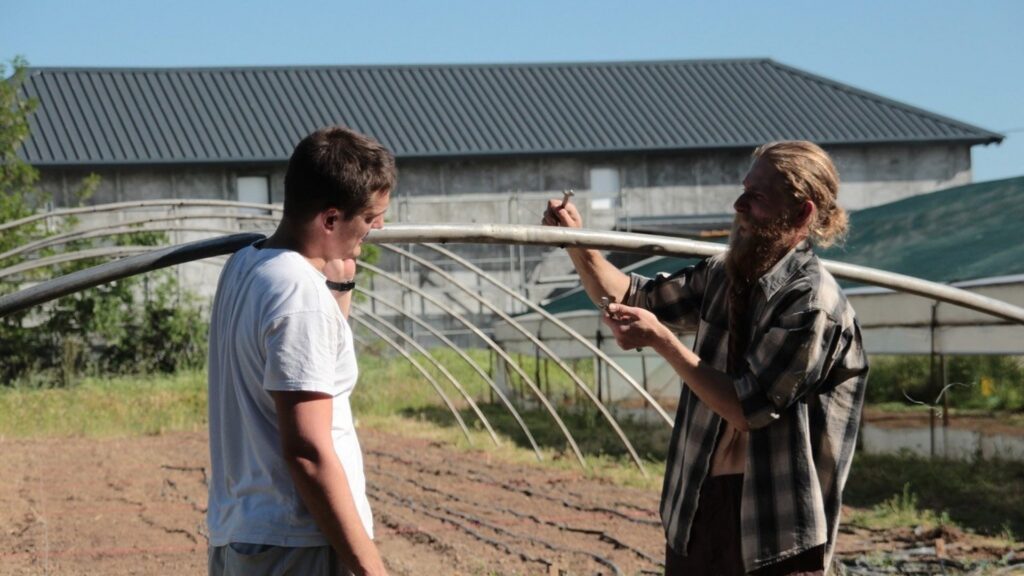
Interview with Stefan Ajkovic, founder of Plovi Farma.
When and why was Plovi Farma founded, and what inspired you to develop this concept?
Plovi started in 2023 with Plovi Market, a platform that let people in Montenegro order fresh produce directly from local growers. Plovi Farma grew out of a question we kept coming back to: why stop at ordering this food, why not let people actually produce it themselves, and then exchange or sell what they grow back on Plovi Market? We opened our first Plovi Farma MVP greenhouse on 1 May 2026. The inspiration was as personal as it was commercial: I grew up in Zeta, the agricultural heart of Montenegro, watching my family work the land, and I wanted to give that lost connection to food back to people who no longer have it.
What challenge or unmet need in food production and consumption did you identify that led to the creation of Plovi Farma?
Industrialisation quietly took two things away from us: our connection to the food we eat, and our control over what actually ends up on our plates. Most people have no real idea how their food was grown or what it was treated with. Plovi Farma gives that control back. You can choose from tens of thousands of seed varieties and grow things that were never even sold in Montenegro before, like the remarkably sweet, pumpkin-shaped watermelons we’ve grown, and much more.
What was the initial vision behind Plovi Farma, and how has the concept evolved since the beginning?
At the start the vision was modest, simply renting out garden beds. But we soon realised we could let people build entire farms of their own. From there the idea evolved into something closer to an interactive game, in the spirit of FarmVille: a farm you grow, level up, and unlock new features for over time — except here the harvest is real and arrives at your door.
What was the key milestone that marked a turning point in Plovi Farma’s journey?
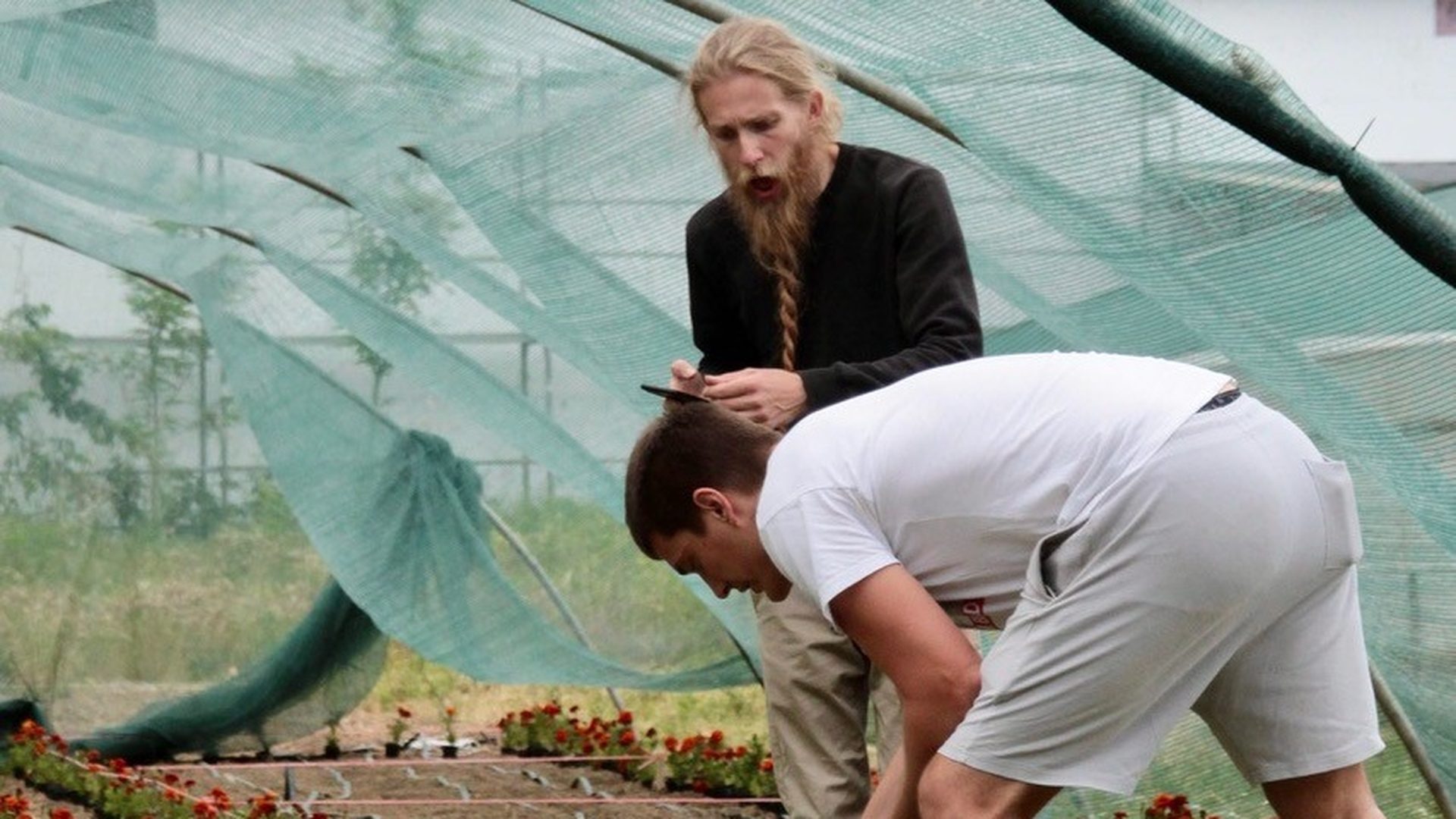
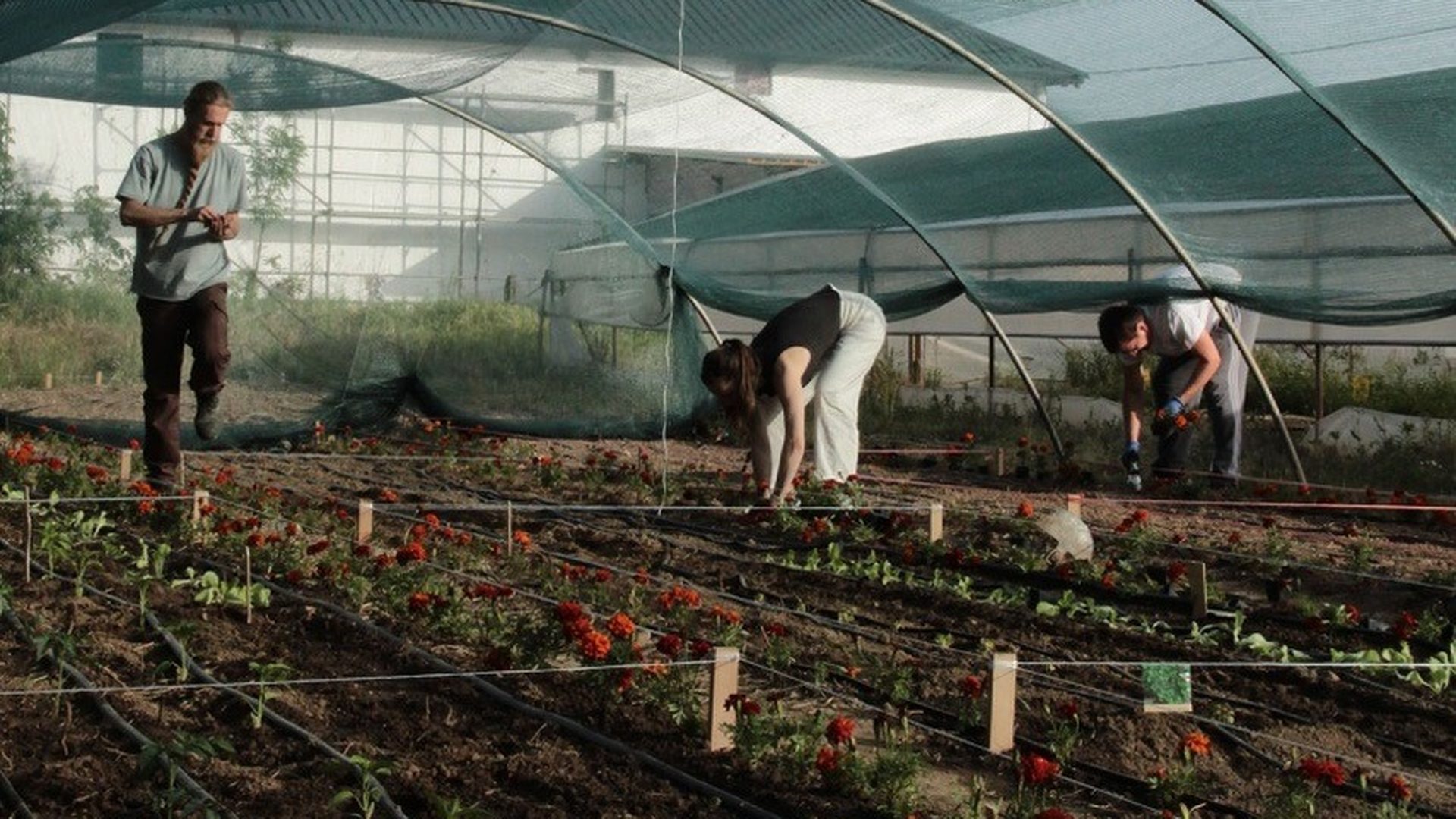
The turning point was building our own MVP. We spent a long time looking for local farmers willing to rent out their beds, but almost no one could picture how it would work. The concept was simply too new. So we built and planted our own greenhouse and began renting it out ourselves. Running into real production problems along the way sparked another key idea: to start collecting a database of best practices from farmers, which will train an AI that helps young farmers grow the right crops and solve the problems they run into.
What exactly is Plovi Farma, and what makes its approach to food production different from traditional farming models?
Plovi Farma is a remote farm you manage from your phone. In the traditional model, the farmer decides what to grow and then has to sell it, while the customer tries to reach genuinely natural food through layers of distributors and middlemen. We removed all of that. It’s simpler for the farmer, who always knows exactly whose tomato or cucumber they are growing, and simpler for the customer, who can see exactly how that tomato or cucumber was grown, whether any pesticides were used, and that everything about it is as it should be.
How does the virtual farm concept work, and how can customers participate in growing their own food without owning or managing a physical farm?
You build and manage your plot entirely from the app, without ever owning land or getting your hands dirty. You choose what to plant, and then either grow it yourself through the app or simply message your farmer to take care of it on the ground and they do. It works like an interactive farm that you level up over time, and every week the actual harvest is delivered to your door.
How does Plovi Farma connect consumers with local farmers, and what value does this model create for both sides?
It connects the two directly, with no middlemen in between. For the customer, the usual doubts: is it fresh, was it sprayed, is it really homegrown, simply fall away; the answer is satisfactory by default. For the farmer, it means a fixed monthly income from renting out the greenhouse and tending the crops, stable earnings instead of the gamble of a single harvest and an uncertain sale. And the customer effectively has their own garden bed, without ever having to dig in it themselves.
What types of products and farming options can customers choose from, and how do you ensure that the production meets their expectations?
Customers can pick from the farmer’s standard list, what the farmer knows grows well on their land or from our catalogue of more than 10,000 seed varieties. A configurator estimates roughly how much a given plot will yield, so expectations are set from the start.
And we back it with harvest insurance: if the yield comes in below plan, Plovi covers the difference by delivering produce from growers connected to Plovi Market.
When did you first become connected with the EIT community, and what motivated you to engage with the European innovation ecosystem?
We came to EIT fairly recently and, fittingly for us, it was actually an AI assistant that pointed us toward the EIT Jumpstarter programme. What motivated us was the chance to measure our idea against a pan-European standard, and to connect food innovation coming out of Montenegro with the wider European ecosystem.
How has support from the innovation ecosystem helped you validate the Plovi Farma concept, understand customer needs, or further develop your business model?
I’ll be candid. So far we have validated Plovi almost entirely on our own. We built the first greenhouse with our own hands, and the strongest validation has come straight from the market, demand for our MVP outstripped what we could offer, and the waiting list keeps growing. That real, paying interest is what told us we were onto something, more than anything else.
What role have mentorship, networking opportunities, and access to European experts and partners played in your journey so far?
Honestly, mentorship and networking haven’t yet been the driving force behind our progress. We have moved forward largely on sheer determination. And that is precisely where we see the biggest untapped opportunity: access to European experts, partners and markets is exactly the kind of support we are actively looking for as we scale.
How has being part of the EIT Jumpstarter community influenced your ambitions and vision for the future of Plovi Farma?
We didn’t make the top three, but we did reach the top 30 and truthfully our ambitions were already high before that and have not changed. Our aim is to become the first startup from Montenegro to be known all over the world, and we are determined to get there.
How does Plovi Farma demonstrate that innovative approaches to agriculture and food production can emerge from smaller European markets such as Montenegro?
It demonstrates it simply by existing and working. Show me where else in the world a system like this is running successfully, and not at a loss, where people can build their own farm from their phone and receive a harvest from it every single week. That is coming out of Montenegro.
What opportunities do you see in the European market for a model that connects consumers directly with local food production?
A model that connects consumers directly with local production strengthens local economic circulation, cuts the CO2 emissions that come with importing food, and gives small farmers, who are being squeezed by large-scale producers, a genuine chance to grow. Across Europe, that combination is a significant opportunity.
Why is it important to support and connect agritech and food innovation from countries like Montenegro with the wider European innovation ecosystem?
Because I believe that if something can work and find success in Montenegro, it can work anywhere. Proving the model here, in a small and demanding market, and then connecting it to the European ecosystem, is how an idea from a country like ours reaches its full potential.
Who are the people behind Plovi Farma, and what values drive your team?
There are two of us. I’m Stefan Ajković, the founder. I have worked extensively with startups, including in the United States, as a product and marketing manager, and I know how to scale products into new markets; launching and scaling my own startup has always been my dream. Alongside me is Oleksandr Sysenko, who leads the hardware and technical side and brings hands-on agricultural experience. What drives us is a refusal to accept that things simply have to stay the way they are and a conviction that food can be far more transparent, interactive and rewarding for the people who eat it.
What has been the biggest challenge in developing Plovi Farma, and what have you learned from building the project so far?
The hardest part was simply starting to produce the food ourselves, building and running that first greenhouse and hitting every real-world production problem along the way. The biggest lesson is that those problems are the product. Every issue we solved became knowledge worth capturing, which is exactly why we are now building a database of best practices to train an AI that will spare the next farmer the same mistakes.
Where do you see Plovi Farma in five years, and how would you like the concept to evolve across Montenegro and Europe?
In five years, Plovi Farma is already operating across the Western Balkans and in its first European Union countries, with the model proven at home and steadily expanding outward.
What advice would you give to other innovators and entrepreneurs working on agriculture, food, or sustainability solutions in Montenegro and the region?
Do not trust authorities. If someone tells you it has to be done a certain way, or that what you’ve imagined can’t be done, that is usually the limit of their imagination, not yours. Try it. If it does not work, try it a different way. If that does not work, try differently again.
Conclusion
Plovi Farma demonstrates how innovation can create a new connection between consumers, local farmers, and food production. By combining digital technology with local agriculture, the project offers a more direct, transparent, and participatory approach to accessing fresh food. Its journey through the EIT Jumpstarter ecosystem shows how innovative ideas from Montenegro can develop into solutions with potential to reach wider European markets.