EIT Community Hub Ukraine Co-Hosted Side Event at URC 2026
August 11, 2026
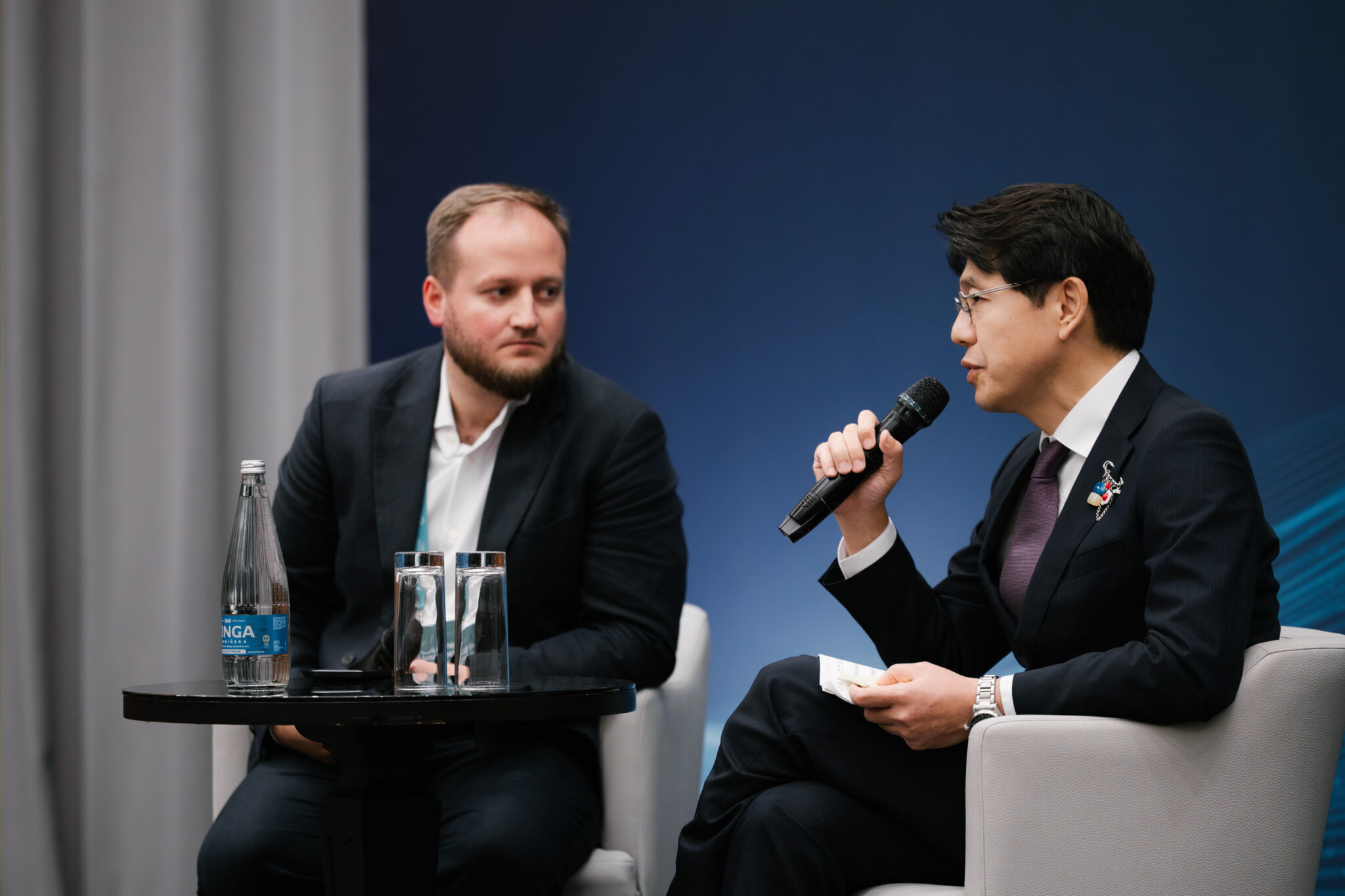
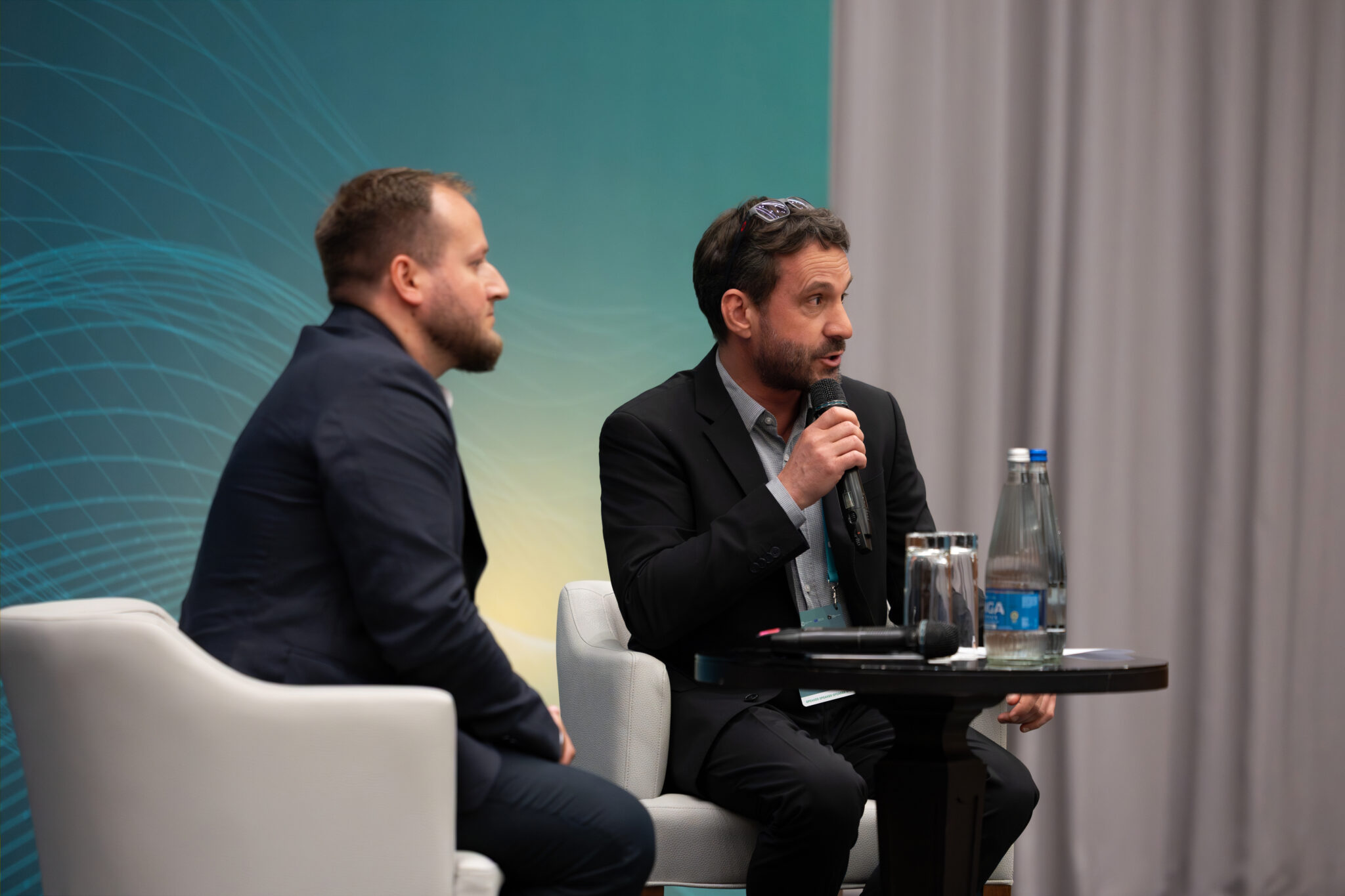
As part of the Ukraine Recovery Conference 2026 (URC 2026), Diia.City Union and EIT Community Hub Ukraine jointly hosted “Ukraine on Europe’s Digital Innovation Map,” a side event that brought together senior government officials, EU institutions, global technology companies, investors, and Ukrainian industry leaders to discuss Ukraine’s growing role in Europe’s innovation and technology landscape.
Organised with the support of the Ministry of Digital Transformation of Ukraine, EU4Innovation East — a regional initiative funded by the European Union, co-funded by the French Government and implemented by Expertise France — and Amazon Web Services (AWS), the event focused on practical cooperation with European partners.
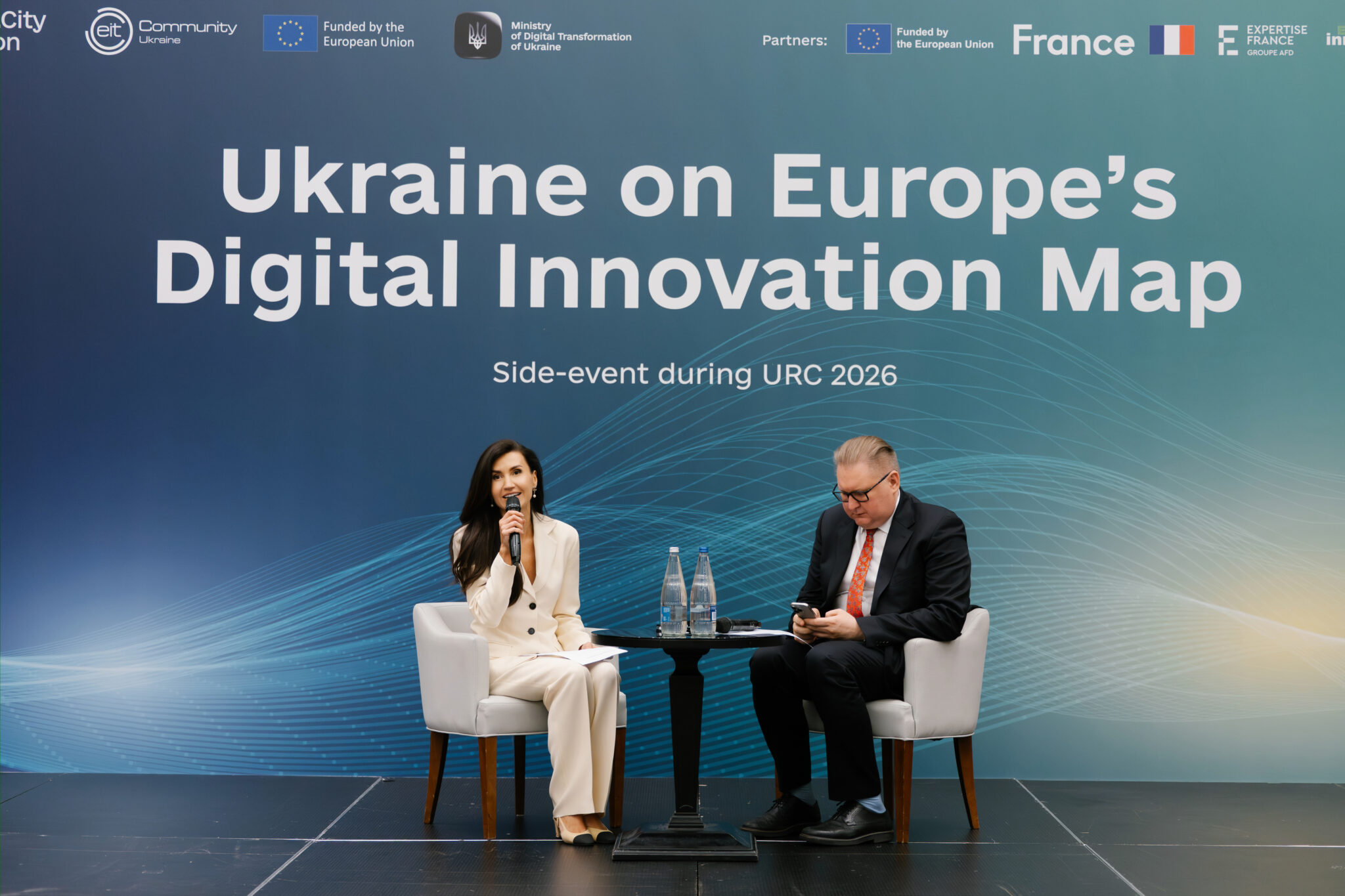
A central highlight of the event was an exclusive interview with Taras Kachka, Deputy Prime Minister of Ukraine for European and Euro-Atlantic Integration. The conversation came just one week after the European Union opened the first negotiation cluster with Ukraine, widely regarded as a major political milestone in the accession process.
Discussion topics included the scope of reforms and milestones covered under the first negotiation cluster, the key challenges ahead and how government, business, and international partners could coordinate to address them, and the rationale behind the EU’s cluster-based accession framework.
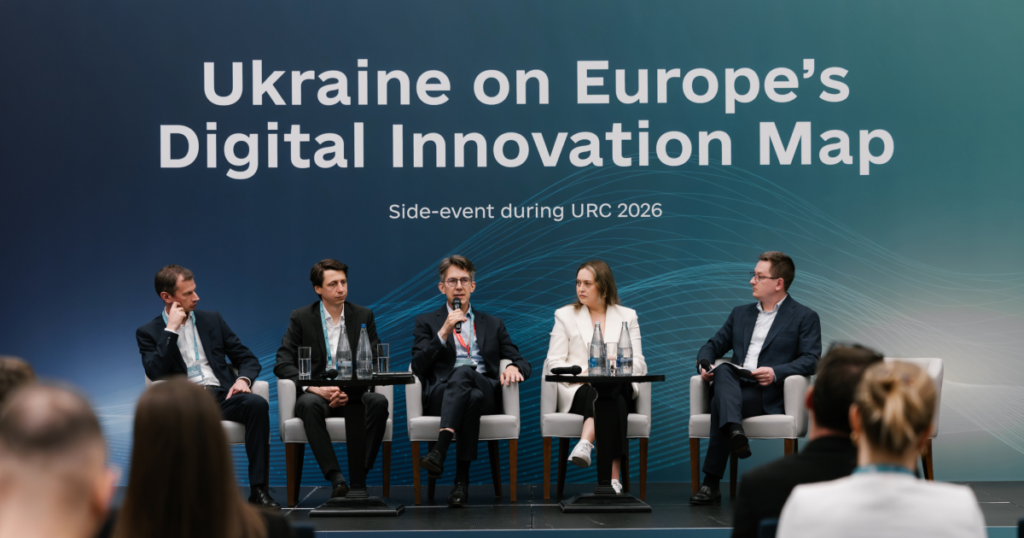
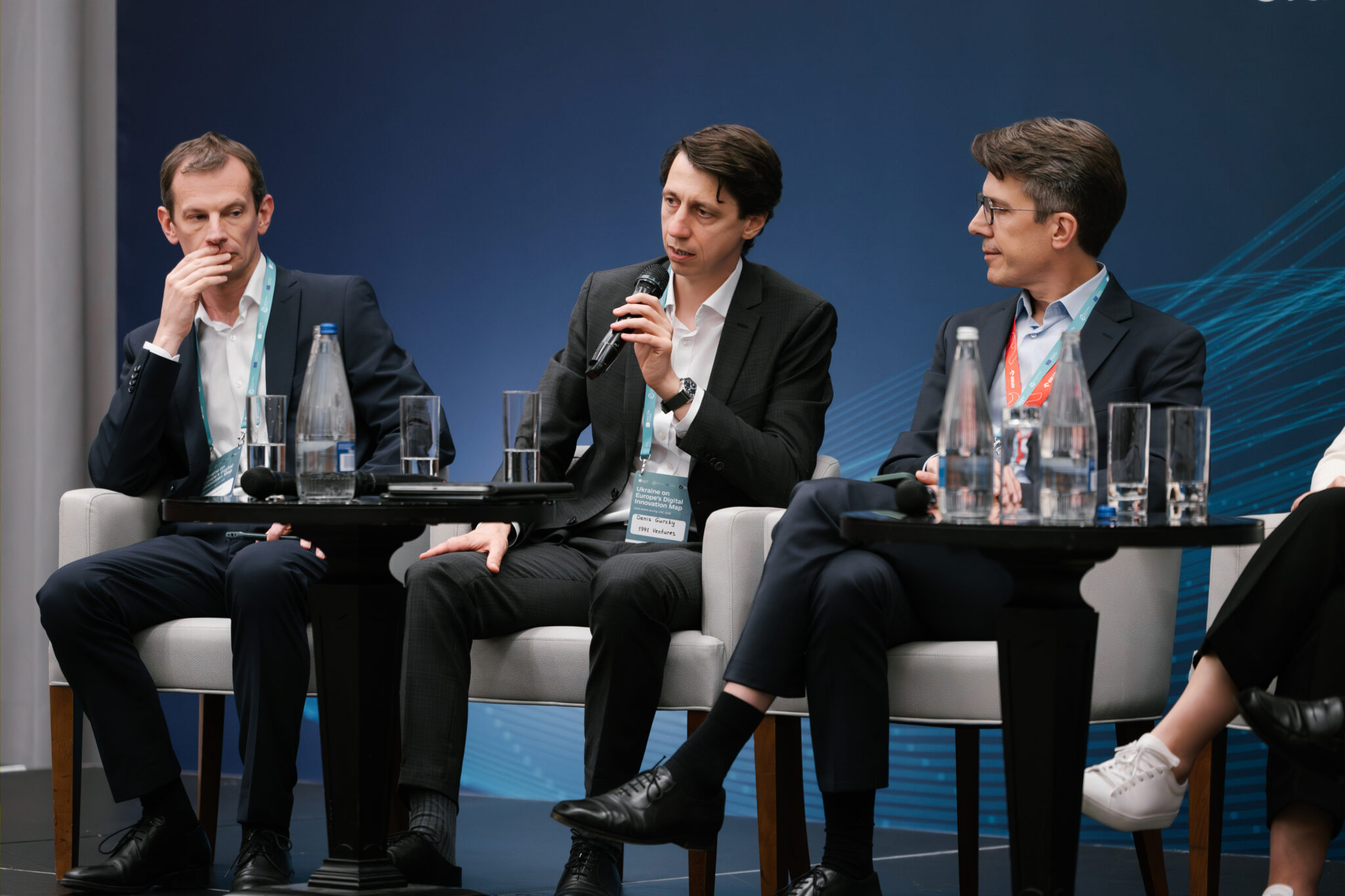
Panel: Ukraine on Europe’s Innovation Map
Moderated by Yehor Pyvovarov, Policy Officer for Research and Innovation at the EU Delegation to Ukraine, the first panel discussion featured:
Matthias Wyrwoll, Managing Director & Head of Official Institutions Advisory, BlackRock
Charles Mathiaux, Deputy Director, EU4Innovation East Project
The panel explored how Ukraine was evolving from one of Europe’s strongest engineering hubs into a fast-growing innovation ecosystem supported by venture capital, European innovation instruments, AI infrastructure, and international partnerships. The discussion centred on Ukraine’s integration into European innovation ecosystems, access to instruments such as Horizon Europe, EIT, and the EIC, advances in AI, deep tech, and cybersecurity, the expansion of international partnerships and joint R&D, and the role of Ukrainian talent in shaping Europe’s technological future.
Key Takeaways
Ukraine was increasingly positioned as a strategic technology partner to Europe and beyond.
Major global technology companies and institutions were deepening long-term investment and infrastructure commitments in Ukraine.
The next chapter of Ukraine’s technology relationship with the world would be driven by investment, innovation, and long-term business partnerships — not aid.
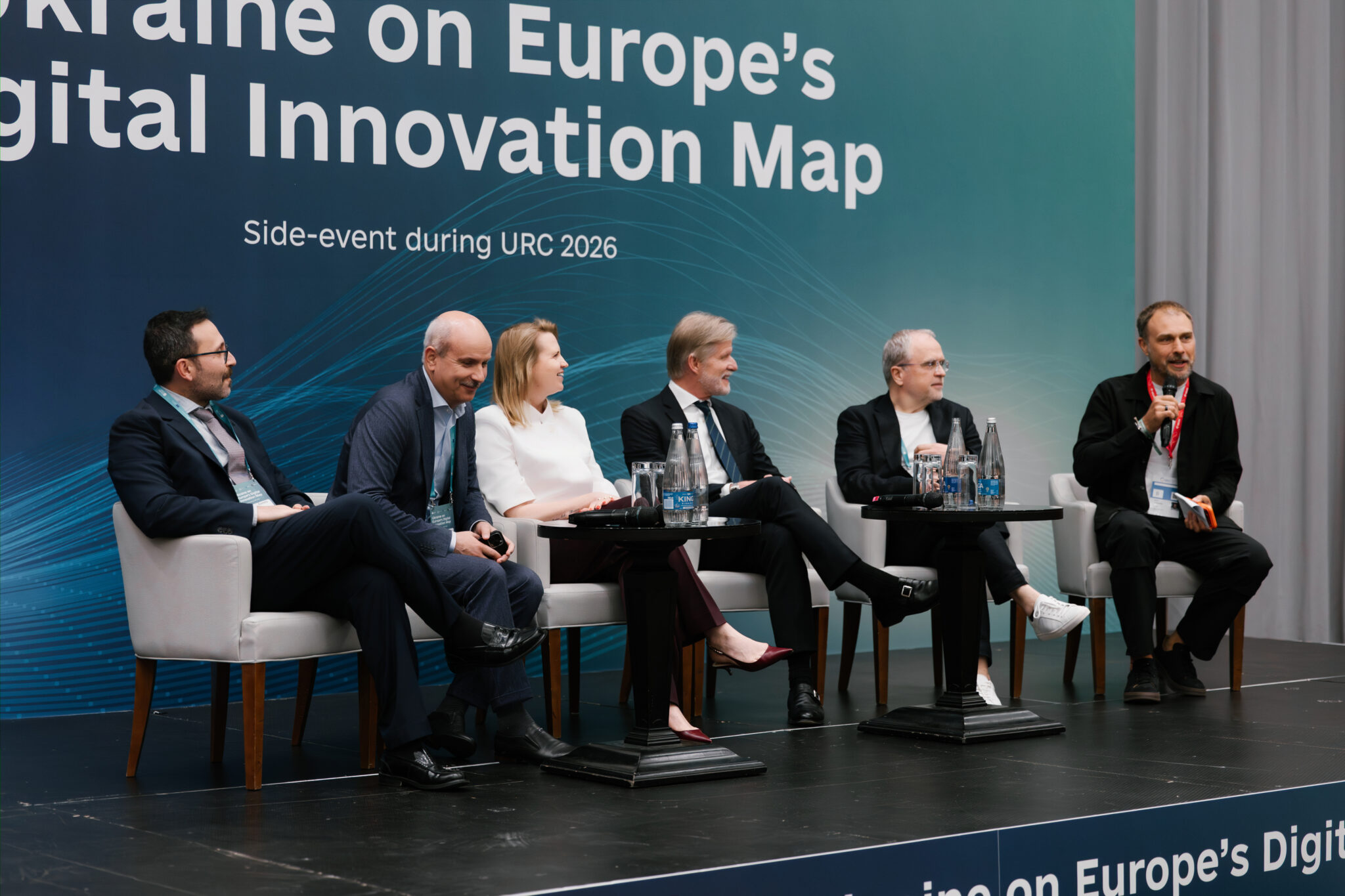
Panel: Beyond Logos — Real Partnerships and Real Impact for Ukraine
Moderated by Valery Krasovsky, CEO and Co-Founder of Sigma Software Group and President of Diia.City Union, this session brought together leaders from major global technology companies and Ukrainian industry to discuss how international partnerships were translating into tangible impact on the ground. Panelists included:
Taras Kytsmey, Co-Founder and Board Member, SoftServe
Gianni Romolo, CEE Expansion Director, Amazon Web Services
Among the key announcements and insights:
Amazon Web Services highlighted the successful migration of more than 14 petabytes of Ukrainian government and public-sector data to secure cloud infrastructure. The company also presented progress on Amazon’s Project Kuiper, with more than 300 low Earth orbit satellites already launched and a constellation of over 3,200 satellites planned by 2027, opening new opportunities for resilient connectivity.
Kyivstar shared that the company had already invested more than $1.3 billion in Ukraine, exceeding its original investment commitments ahead of schedule. These investments supported the expansion and resilience of telecommunications infrastructure while accelerating the development of digital services and new technologies. The company also highlighted its transformation from a traditional telecom operator into a comprehensive digital ecosystem by combining connectivity with digital services, big data, AI, cloud solutions, and strategic partnerships with global technology companies.
Google shared the results of its Ukraine Startup Support Fund, which had invested $15 million into Ukrainian startups that had already attracted more than $60 million in follow-on investment.
Microsoft reflected on more than 30 years of operations in Ukraine, highlighting AI-powered solutions supporting cybersecurity, damage assessment, demining, and public-sector digital transformation.
SoftServe highlighted the rapid evolution of Ukrainian technology companies from software outsourcing toward AI consulting, enterprise transformation, and AI agent development.
The event closed its formal programme with an interview featuring Kotaro Tanaka, Director General of the Japan International Cooperation Agency (JICA), moderated by Ihor Markevych, focused on Japan’s role in supporting Ukraine’s innovation-driven recovery.
Throughout the side event, one message remained consistent: innovation, technology, and talent were becoming central pillars of Ukraine’s economic future and an increasingly important contribution to Europe’s own competitiveness and resilience.
“We believe Ukraine’s recovery is about building something stronger, smarter, and more innovative together with our international partners. Today, Ukraine’s tech sector generates more than $6.6 billion in exports, employs over 300,000 professionals, and remains one of the key drivers of economic growth despite the war. At the same time, we are implementing AI at a national scale, developing our first national large language model, and building one of Europe’s most dynamic technology ecosystems through Diia City. Because Ukraine’s path to Europe is also about innovation, technology, and building an economy that can compete globally.” — Valeriia Kushnerchuk, Executive Director, Diia.City Union
“For years, the conversation about Ukraine in Europe has been about needs — what we require, what we’re missing, what has to be rebuilt. Today’s conversation is different. It’s about what Ukraine brings: deep-tech talent forged under pressure, dual-use innovation moving at wartime speed, and an ecosystem that has learned to build, ship, and scale when failure is not an option. Ukraine is not asking for a seat at Europe’s innovation table. We’ve earned it — in defense tech, in resilience engineering, in companies competing on global markets right now, today, while the war continues at home.” — Ihor Markevych, EIT Community Officer in Ukraine, co-organiser of IT Arena, CEO at Enablers.Solutions
“Ukraine has already demonstrated that innovation is one of its greatest strengths. Even under extraordinary circumstances, its technology ecosystem has continued to develop solutions with global relevance. It is therefore essential to deepen Ukraine’s integration into the European innovation ecosystem by connecting its entrepreneurs, researchers, and companies with European networks, investors, and markets. Through EU4Innovation East, we are proud to support this process, as Ukraine’s innovation potential will contribute not only to the country’s recovery and reconstruction, but also to Europe’s long-term competitiveness and innovation capacity.” — Julien Schmitt, Project Director of EU4Innovation East
Manage Consent
To provide the best experiences, we use technologies like cookies to store and/or access device information. Consenting to these technologies will allow us to process data such as browsing behavior or unique IDs on this site. Not consenting or withdrawing consent, may adversely affect certain features and functions.
Functional
Always active
The technical storage or access is strictly necessary for the legitimate purpose of enabling the use of a specific service explicitly requested by the subscriber or user, or for the sole purpose of carrying out the transmission of a communication over an electronic communications network.
Preferences
The technical storage or access is necessary for the legitimate purpose of storing preferences that are not requested by the subscriber or user.
Statistics
The technical storage or access that is used exclusively for statistical purposes.The technical storage or access that is used exclusively for anonymous statistical purposes. Without a subpoena, voluntary compliance on the part of your Internet Service Provider, or additional records from a third party, information stored or retrieved for this purpose alone cannot usually be used to identify you.
Marketing
The technical storage or access is required to create user profiles to send advertising, or to track the user on a website or across several websites for similar marketing purposes.