
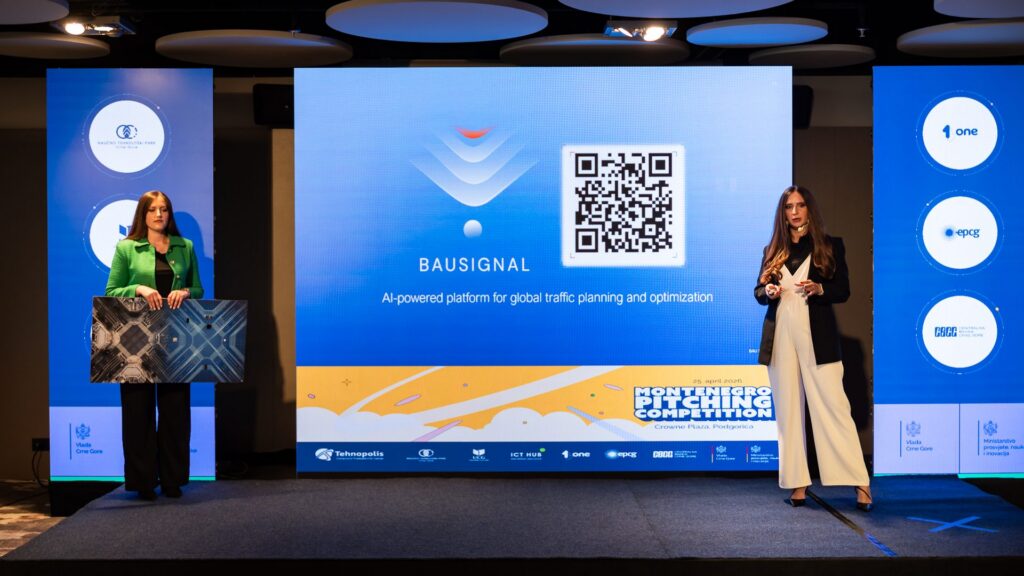
Interview with Amela Murić and Elda Kalač.
A women-led Montenegrin innovation. European ambition.
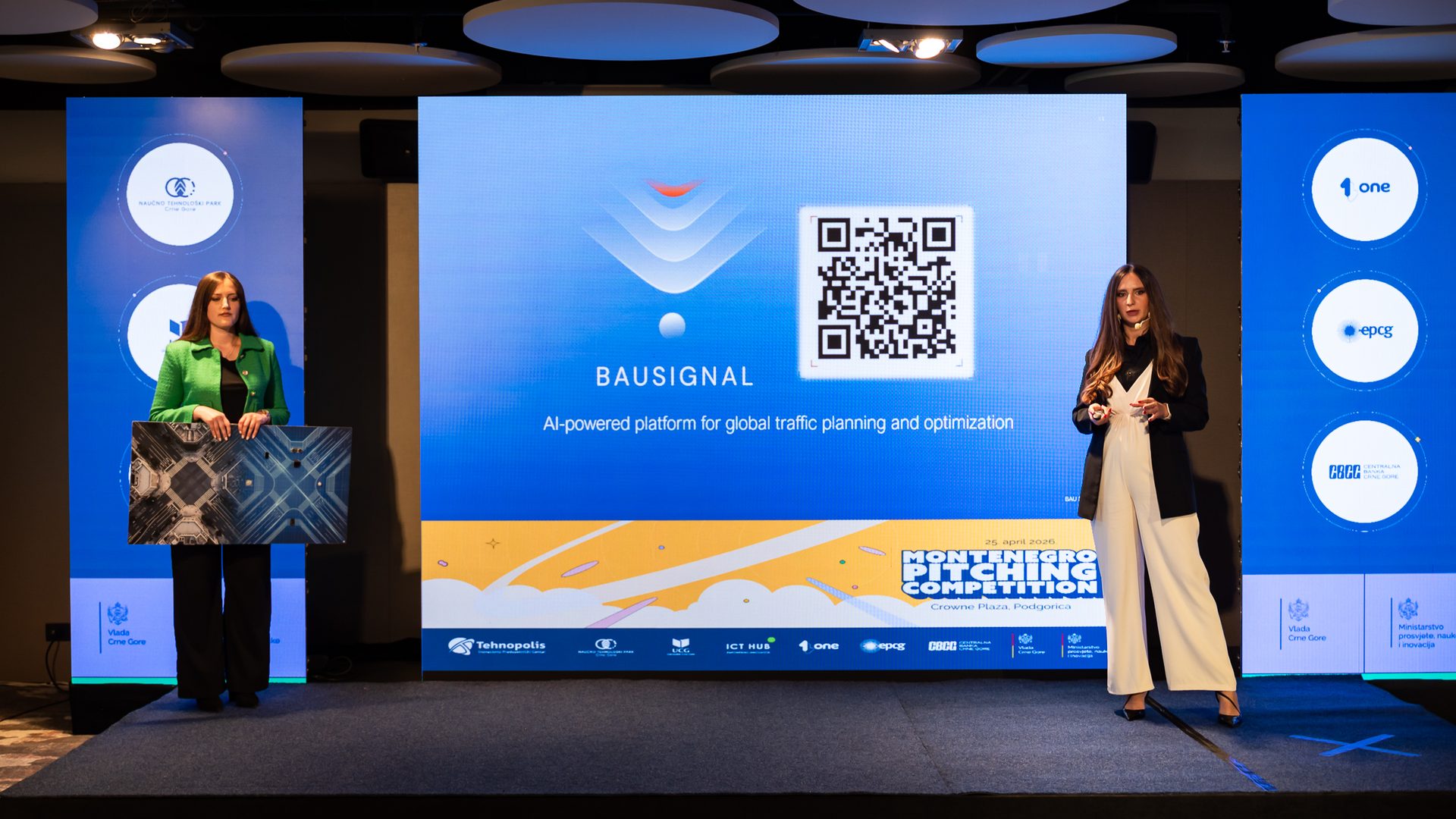
Can you introduce BauSignal and tell us the story behind its creation?
BauSignal was born three years ago at a themed hackathon called “IT in Tourism,” held in Ulcinj, south part Montenegro. Most of the other teams focused on tourism-related travel apps, but we noticed a much bigger problem that was quietly damaging the quality of tourism in Montenegro: traffic congestion and poor road flow.
We realized that heavy summer traffic jams were spoiling the experience of visiting Montenegro’s coast and its attractions, and that this was actually discouraging some tourists from choosing Montenegro as a destination in the first place. Instead of building another travel app, we decided to tackle the root cause of the problem. We designed a simulator that could recreate real traffic conditions and let us test different infrastructure changes to measure their actual impact before implementing them in real life.
Our first pilot was in Ulcinj, where we simulated the peak of the summer tourist season. The simulation gave us a visual, dynamic picture of how congestion builds up as a chain reaction across the road network, showing exactly which intersection was the root cause of a jam and which ones were simply suffering the consequences downstream. That first pilot became the foundation for what BauSignal is today: a platform that helps engineers and authorities understand and solve traffic problems with data and simulation, rather than guesswork.
When and why was BauSignal founded, and what inspired you to develop a digital solution for traffic management during infrastructure works?
BauSignal has gone through many pivots since that first hackathon in Ulcinj. What has stayed constant is the core engine — the simulation logic that models real traffic behavior, while everything built around it has evolved and matured. Traffic itself is an extremely complex system with many possible applications, from urban planning to public transport optimization to construction management, so rather than trying to solve everything at once, we made a deliberate choice to focus on one segment at a time and prove real value there first. Expanding into adjacent applications remains part of our long-term vision, but our founding motivation was always the same: to replace manual guesswork with data and simulation wherever traffic decisions are being made.
What challenge or gap in the construction and transport sector did you identify that led to the development of BauSignal?
One of the clearest gaps we identified is that not every municipality has the budget to commission a proper traffic impact study before making changes to road infrastructure. This means that many decisions, especially at the local level, are made without solid data behind them, simply because a full case study is too expensive or too slow to obtain. We saw an opportunity to make that kind of analysis dramatically more accessible, so that budget size no longer determines whether a city can make an informed decision about its traffic infrastructure.
What was your original vision for BauSignal, and how has it evolved since the beginning?
Originally, BauSignal was imagined as a tool for municipalities to plan and evaluate changes to their traffic infrastructure. Over time, as we worked directly with real use cases like city of Kotor and Ulcinj, we saw that the same core technology could also serve a more immediate and commercially proven need: simulating the traffic impact of construction works and generating compliant traffic plans for contractors and authorities. The vision has grown from a planning tool for cities into a broader platform that can serve both the public and private sides of infrastructure development, while keeping the door open to return to the original municipal-planning use case as we scale.
What has been the most significant milestone in BauSignal’s journey so far?
One of the most significant milestones was our participation in the “Boost Me Up” program, organized by Innovation Entrepreneurship Center – Tehnopolis. Their support through mentorship, guidance, and practical advice, combined with financial backing, helped us take a real step forward, both during the program and after it ended.
The Tehnopolis community has continued to be a strong pillar of support for us, and that experience gave us the structure and confidence to keep building.
What solution does BauSignal provide, and why is it important for infrastructure projects and urban mobility?
We simulate traffic based on real movement data from actual road users, which allows us to create a realistic digital replica of real-world traffic essentially a digital twin. On top of that digital twin, we use artificial intelligence to build predictive models that show how different rule changes would affect the overall traffic network. This means we can test scenarios that have not happened yet and measure their impact before any physical change is made, which is critical for infrastructure projects where mistakes are costly and urban mobility is directly at stake.
How does your platform simplify the planning and simulation of traffic closures during construction works?
For the end user, the process is quite simple. They upload the project they are planning to carry out and set the input parameters related to the planned work dynamics, and the rest happens automatically. The end user receives a complete traffic plan, including the placement of traffic signage and an analysis of the works’ impact on traffic. Work that used to take several weeks to prepare manually is now completed automatically in about half an hour.
How does BauSignal help engineers, contractors, and local authorities reduce costs, save time, and ensure compliance with traffic regulations such as the RSA21 standard?
BauSignal acts as a collaborator in traffic analysis for engineers, contractors, and authorities. It gives them the ability to test multiple scenarios and choose the best option before implementation. Every construction project is unique, but the rules within the RSA21 standard remain the same, and adapting the traffic signage plan to each specific project used to be a manual process.
Now it is automated, which significantly reduces planning time and lowers the risk of permit rejection due to an oversight or non-compliance.

What role do automation and digital technologies play in improving the planning process compared to traditional manual methods?
Automation makes the process faster and more consistent, while manual work is naturally more prone to error, especially when it involves repetitive regulatory checks. There are tasks that people are simply better at, and there are tasks where digital tools outperform manual effort — traffic plan generation and compliance checking fall clearly into the second category, which is exactly where BauSignal focuses its automation.
Why is efficient traffic management during construction becoming increasingly important for modern cities?
Cities everywhere are growing, both in population and in the number of vehicles on the road, which drives an ever-increasing need for mobility. Movement is one of the most basic needs of modern life, and it cannot be seriously disrupted without real consequences for people’s daily routines, businesses, and quality of life. That’s why traffic management during construction can no longer be treated as an afterthought – it has to be planned with the same rigor as the construction itself.
When did you first become connected with the EIT Community, and what motivated you to engage with the European innovation ecosystem?
We first connected with the EIT Community Hub Montenegro last year at one of their info days. That’s where we learned about the programs available and how to apply. It became clear to us that if you already have a project or mission you’re working on, one that creates real value for society, there is financial support and structured guidance out there to help that project truly come to life — and that motivated us to engage.
How has the support of the EIT Community Officer in Montenegro helped you validate your idea, develop your product, or accelerate your growth?
The mentorship and advice we have received, grounded in concrete situations and direct challenges to our hypotheses, have helped us grow faster and think more critically. Different mentors bring different perspectives and see situations differently, but they all share the same goal of helping us succeed, and that combination of diverse input toward a common purpose has been extremely valuable.
EIT Jumpstarter is one of Europe’s leading pre-accelerator programmes, supporting the most promising early-stage innovators from across Europe. What did it mean for BauSignal to be selected among this year’s participants?
Being selected is a significant validation that we are on the right path and that we are building something genuinely valuable. We are deeply grateful to everyone who recognizes the importance of our solution and gives us the opportunity to keep developing it within such a strong European network.
How has being part of the European innovation ecosystem influenced your ambitions and future plans?
It has simply given us the wind at our backs to keep moving forward. It confirmed that our ambition to scale beyond Montenegro is realistic and gave us the confidence and network to pursue it more seriously.
What opportunities do you see for BauSignal in the European market?
BauSignal is designed with the European market and its regulatory framework in mind. Regulations exist for good reasons, but they can sometimes slow down processes considerably, and that’s precisely where BauSignal steps in, to compensate for that friction by making regulatory compliance faster and easier without compromising on the standards themselves.
How do you see your solution contributing to smarter, safer, and more sustainable cities?
Data-driven solutions are essential for the future of urban mobility, and that is a mission we share. By replacing guesswork with simulation and real data, BauSignal helps cities make decisions that lead to safer roads, smoother traffic flow, and, ultimately, more sustainable urban environments.
As two female founders in the technology and construction sectors, what has your entrepreneurial journey been like, and what values define your team?
The founder’s journey itself is challenging, but as female entrepreneurs, we’ve also experienced incredibly encouraging moments and support along the way.
The values that define our team are open communication and continuous, consistent work, we believe that transparency with each other and steady progress, even in small steps, are what ultimately build something lasting.
What message would you share with other women who are considering starting a technology company?
The beginning is always hard, and growth is never linear – it tends to be exponential once things start moving. If you have an idea, act on it as soon as possible. Either you will discover it does not work and pivot to something else, or the pieces will start falling into place on their own, and you’ll see your next step become clear.
How does BauSignal demonstrate that innovative solutions can emerge from smaller countries such as Montenegro?
Follow our journey, and we will find that out together. The size of a country has never been a precondition for someone’s success — good ideas and hard work can come from anywhere, including a small country like Montenegro.
What has been the biggest challenge in building BauSignal, and what have you learned along the way?
The biggest challenge has been building the business model itself. We had many open questions and a lot of uncertainty to work through. Coming from a technical background, entrepreneurship was a completely new field for us, and along the way, we learned a great deal about it. Perhaps the most important lesson was learning to ask — for advice, for feedback, for help — instead of trying to figure everything out on our own.
Where do you see BauSignal in the next five years?
We see BauSignal as the official tool for regulatory planning and traffic infrastructure changes across Europe, used both by contractors carrying out infrastructure works and by the public authorities responsible for approving them.
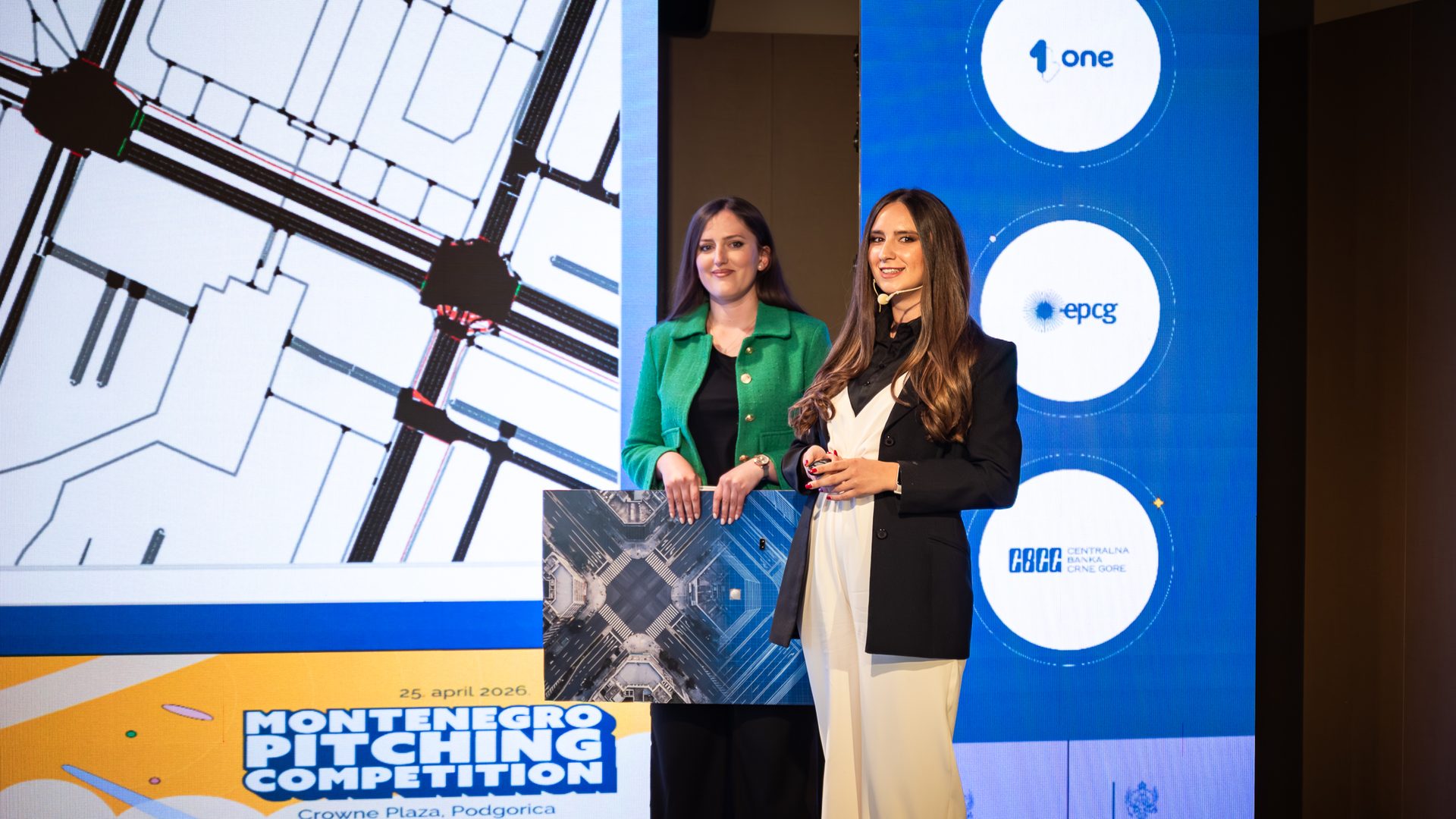
What advice would you give to aspiring entrepreneurs and innovators who want to transform their ideas into successful businesses?
Act quickly, and pay close attention to the feedback you receive, both from clients and from mentors. Speed of execution combined with a genuine willingness to listen and adapt is often what separates ideas that stay ideas from ideas that become real businesses.
BauSignal demonstrates how digital innovation can transform the way infrastructure projects are planned and managed. By combining technology, engineering expertise and a clear understanding of real-world challenges, the startup is helping create safer, more efficient and sustainable urban mobility. With the support of the European innovation ecosystem, BauSignal aims to bring a solution developed in Montenegro to infrastructure projects across Europe.