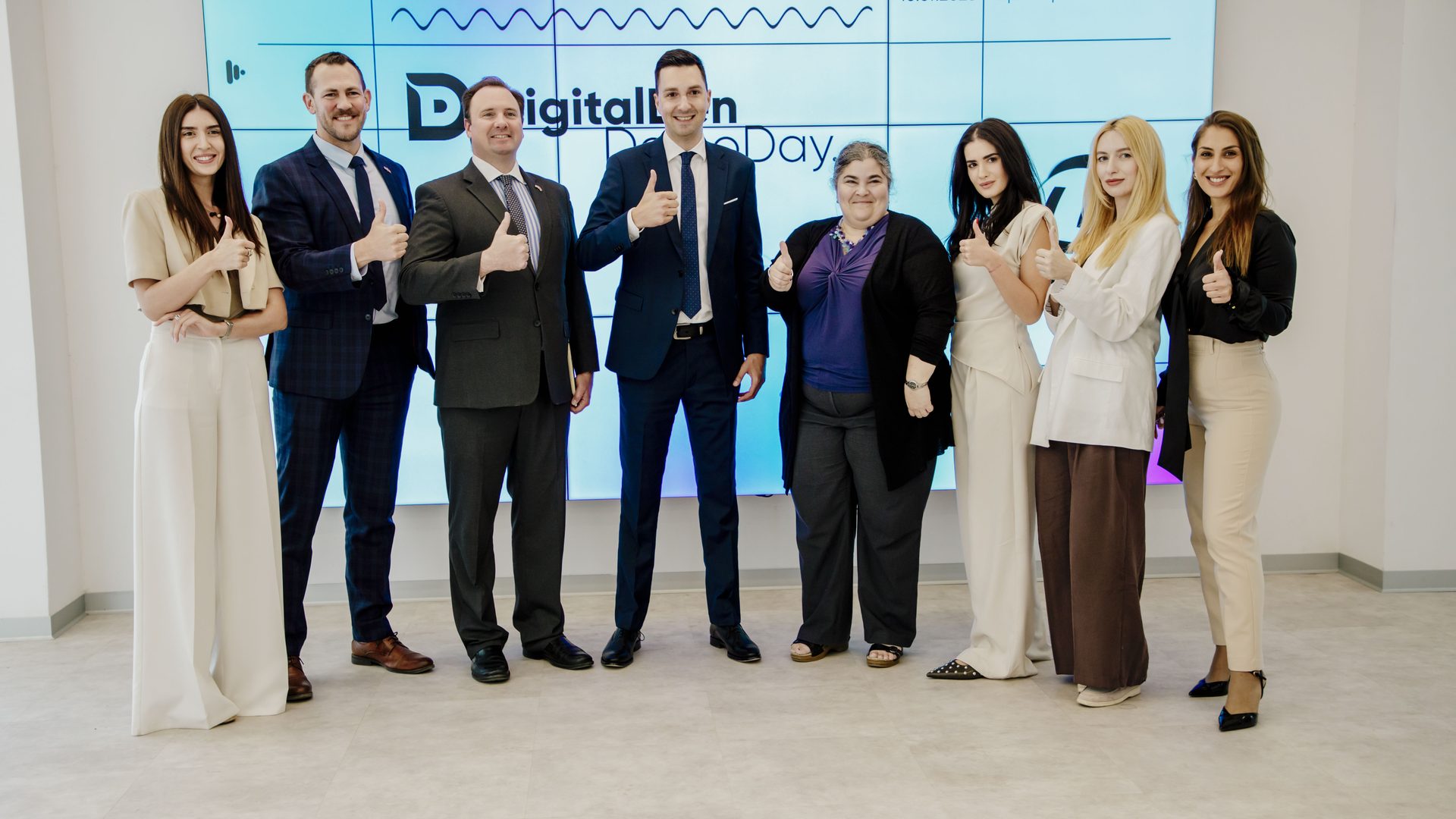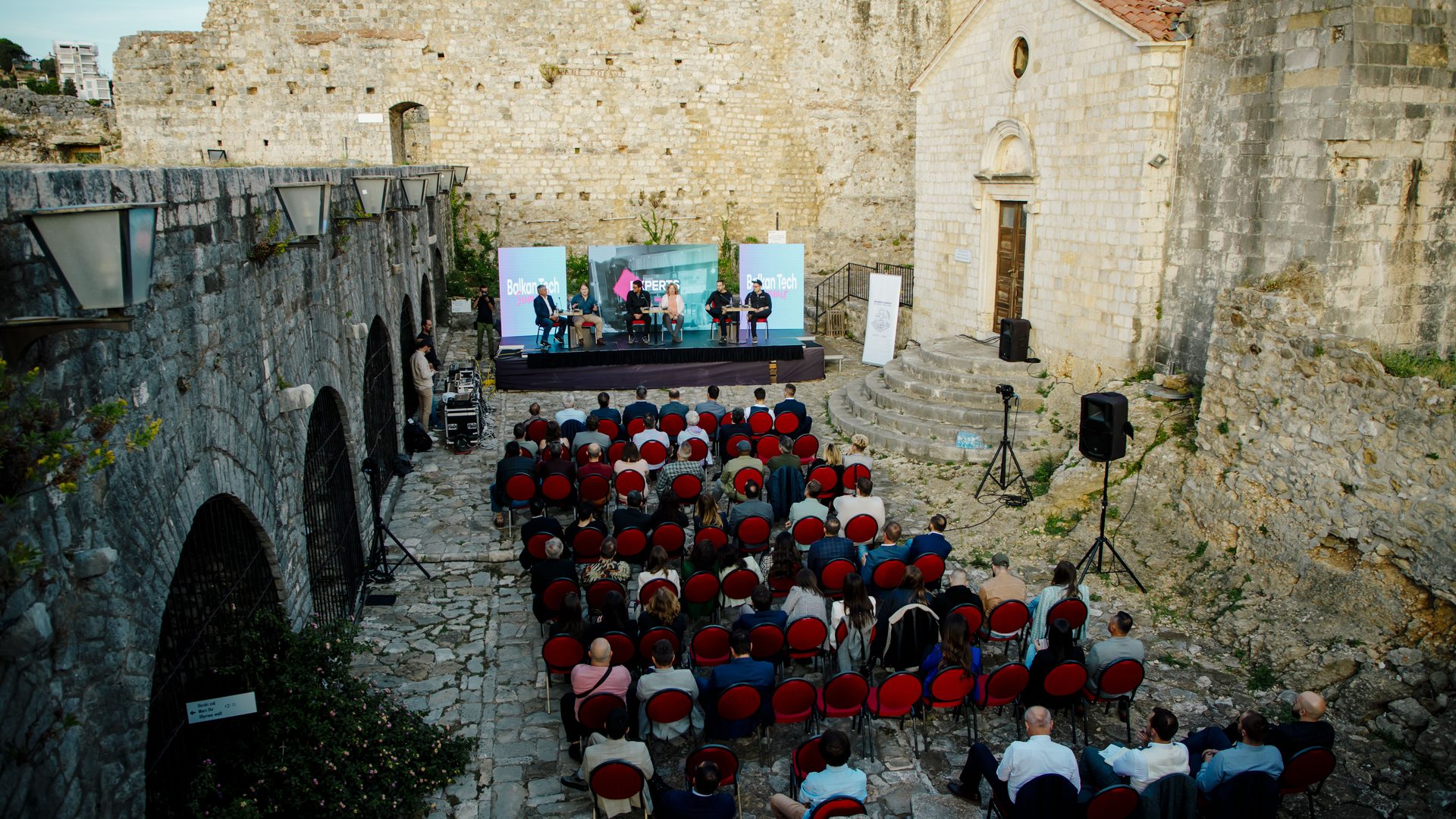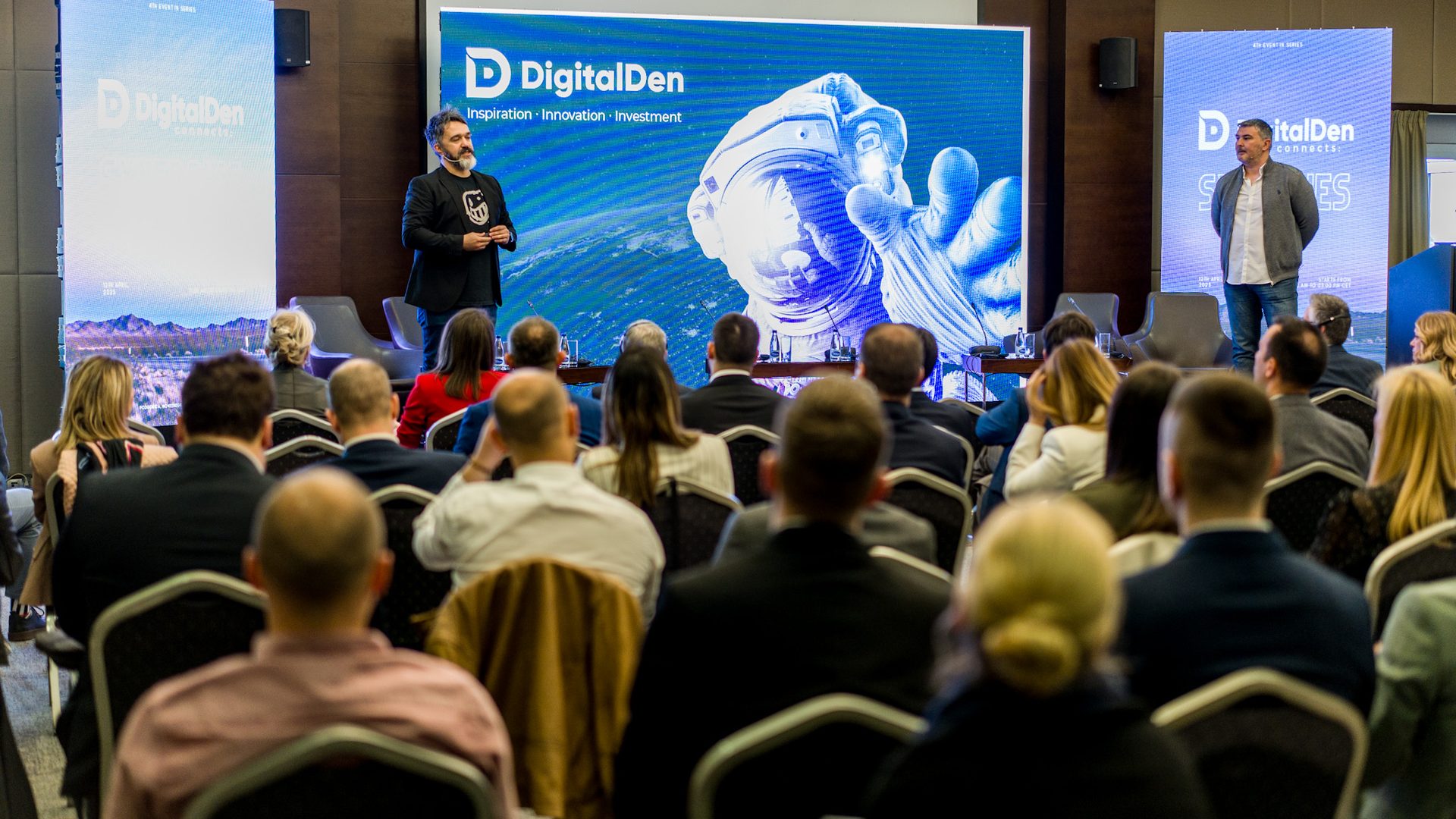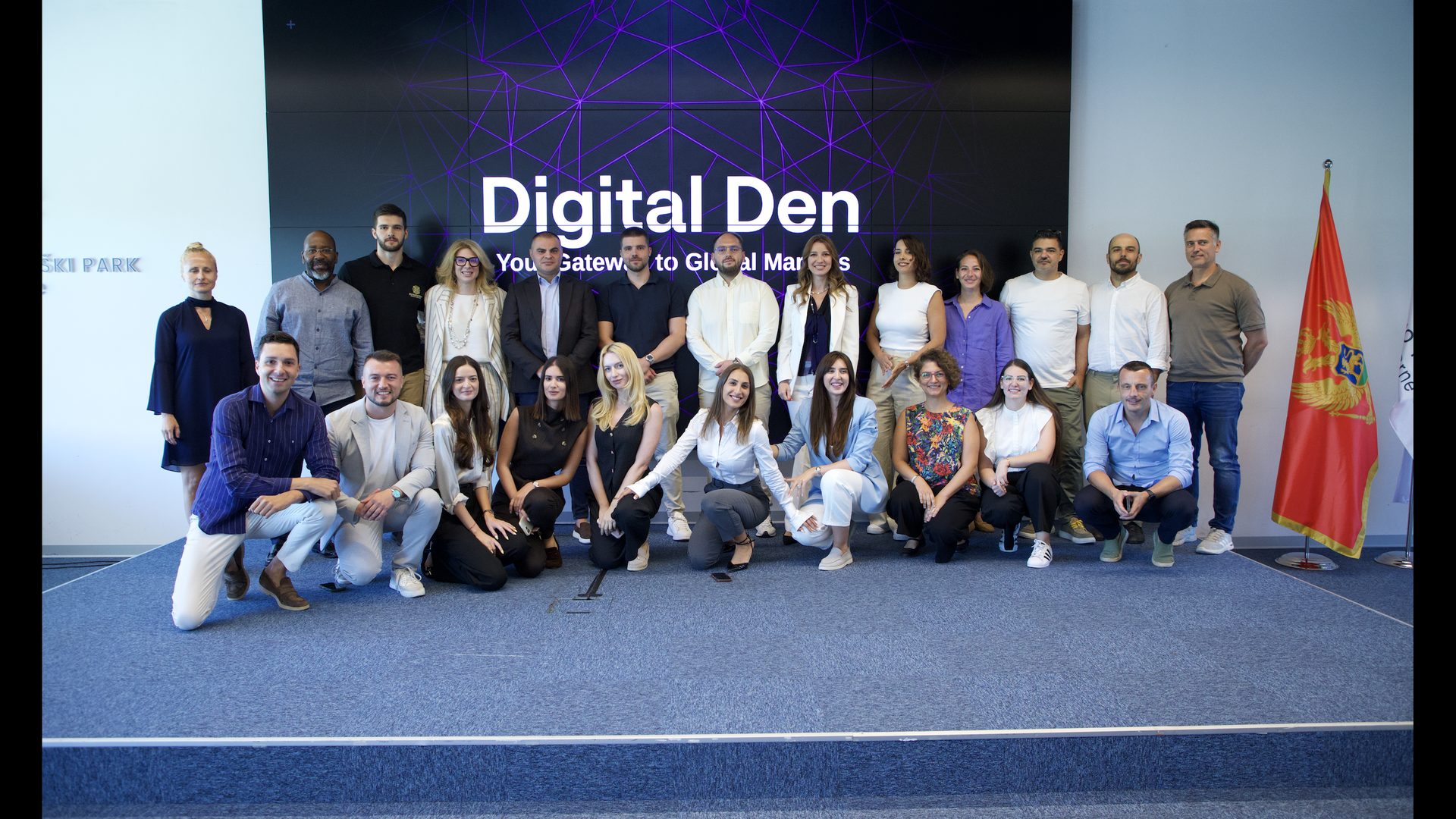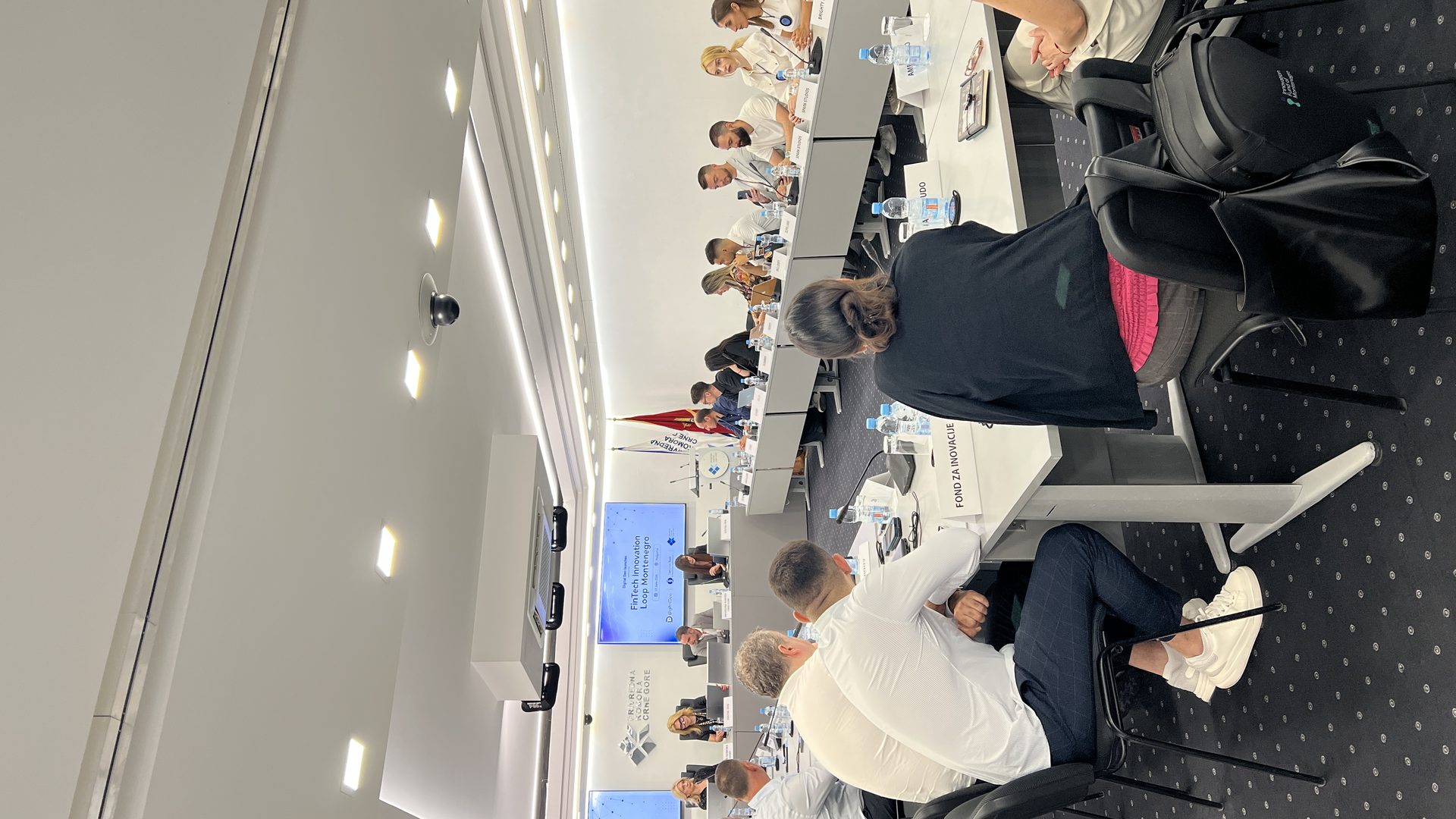
Interview with Sandra Kordic, PhD, CEO of Digital Den.
Digital Den is a Montenegro-based venture studio that supports startups and entrepreneurs through mentorship, strategic guidance, professional services and access to international networks. By connecting innovative founders with investors, industry experts, corporations and global partners, Digital Den helps transform promising ideas into scalable businesses while contributing to Montenegro’s innovation ecosystem and its integration into the wider European market.
Can you introduce Digital Den and tell us what inspired you to establish a venture studio dedicated to supporting startups from Montenegro and the Western Balkans?
Digital Den was established to address a practical gap in the local and regional innovation ecosystem. We saw many promising founders with strong ideas, technical knowledge and ambition, but without the coordinated support needed to turn an early concept into a validated product, a sustainable business model and, ultimately, an internationally competitive company.
From the beginning, our approach has been more hands-on than that of a traditional incubator. We do not see our role as simply providing workshops, office space or introductions. We work with founders across different stages of development—from validating the problem and understanding the customer to product development, business modelling, legal and administrative support, access to finance, pilot opportunities and international markets.
Today, Digital Den operates at the intersection of startup development, industry innovation and international market access. We work with startups, innovative SMEs, researchers, international founders and teams developing commercially oriented solutions. Our goal is simple: to reduce the distance between a good idea and a real market opportunity.
We also believe that Montenegro can play a much larger role in the regional innovation economy than its size might suggest. By attracting promising teams from the Western Balkans, connecting them with Montenegrin companies and institutions and opening access to European and global markets, we aim to build an ecosystem that creates innovation locally while attracting talent, knowledge and capital from abroad.
Digital Den describes itself as a gateway for Balkan startups to global markets. What does this mission mean in practice, and how do you help founders turn ideas into scalable businesses?
For us, being a gateway to global markets does not begin with putting a startup on a plane or introducing a founder to an investor. It begins much earlier.
A startup first needs evidence: that the problem is real, that the right customer has been identified, that the solution creates value and that someone is prepared to use or pay for it. This is why our support model is structured around a journey from assumption to evidence.
Depending on the company’s stage of development, we may work with the team on customer discovery, problem validation, prototype or MVP development, business modelling, pricing, go-to-market strategy, intellectual property, legal and regulatory requirements, financial planning or investment readiness.
We are also developing a sandbox model through which sufficiently mature solutions can be tested in controlled or real-world environments in cooperation with companies and institutions.
Another important part of our work is our Startup as a Service model. Founders frequently need several services at the same time—a lawyer, accountant, technology specialist, market expert, investor introduction or support with company registration. Instead of leaving them to navigate these processes independently, Digital Den acts as a coordinating point, bringing the necessary services together around a common development objective.
Once a company is genuinely ready, internationalisation becomes the next step. Through our networks and programmes in Europe and the United States, we provide support in market research, mentor and investor access, B2B meetings, acceleration, soft landing and business development.
In other words, global exposure is not the product we offer. The product is readiness—and international access becomes valuable once that readiness exists.
Over the years, Digital Den has supported numerous innovative startups. Which achievements are you most proud of, and what impact have they had on the regional innovation ecosystem?
Digital Den has built a portfolio of more than 30 startups from Montenegro and the wider Western Balkans. Through our work with the private sector and Montenegro’s innovation incentive framework, we have helped mobilise more than €6 million in pre-seed investment for startups, demonstrating that local private capital can play an important role in early-stage innovation financing.
However, our achievements go beyond fundraising. Startups from our portfolio have established companies in Montenegro, entered the national innovation system, developed products, participated in international acceleration programmes, established a presence in foreign markets and built relationships with customers, investors, universities and industry partners.
Several companies have progressed from very early development stages to international recognition. One recent example is Dr. Knight, which received a World Intellectual Property Organization Award in 2025. It demonstrates how research, intellectual property and entrepreneurship can come together in a commercially relevant solution.
We have also contributed to the development of investment infrastructure through the Balkan Tech Fund initiative, designed to bring private venture capital closer to startups from Montenegro and the region.
Perhaps our most important contribution has been demonstrating a viable model. Montenegro does not need to build every component of a mature innovation ecosystem independently. It can connect its entrepreneurs with leading international expertise while simultaneously strengthening local investors, institutions, companies and support mechanisms.
That combination of local capacity and international access is the long-term impact we want to create.
International collaboration is one of the key pillars of your work. How have partnerships with organisations across Europe and the United States contributed to the success of the startups you support?
International programmes and the partnerships developed through them have fundamentally shaped Digital Den. Their greatest value lies not in the number of countries or organisations in our network, but in the expertise, market access and concrete opportunities they provide to individual companies.
In the United States, through the MTSB project supported by the U.S. Department of State, several years of cooperation with accelerators, universities, investors, economic development organisations and experienced entrepreneurs enabled our startups to work directly with ecosystems in Maine, Texas, Arizona, Colorado, Illinois and New York. These relationships gradually evolved from business visits into structured acceleration, mentoring and soft-landing opportunities.
We later applied the same principle in Europe. Through MTSB Europe and other European partnerships, startups have gained direct exposure to innovation ecosystems in Luxembourg, Belgium and the Netherlands, including targeted meetings with investors, accelerators, companies and potential strategic partners.
These experiences taught us an important lesson: internationalisation creates the greatest value when it is closely connected to a company’s actual development needs. A startup that is not ready to sell, conduct a pilot or raise investment gains limited value from simply attending an international event.
For that reason, we now place much greater emphasis on preparation before international exposure and structured follow-up afterwards. We help teams identify the right market, determine whom they need to meet, adapt their value proposition and communication materials and define the desired outcome of each introduction.
International cooperation also works in the opposite direction. It enables us to bring mentors, methodologies, investment knowledge and market experience back to Montenegro. These partnerships therefore support individual startups while gradually transferring knowledge and international standards into the wider ecosystem.
How has your cooperation with the EIT Community Hub Montenegro and the wider EIT ecosystem supported your activities and opened new opportunities for entrepreneurs?
Our cooperation with the EIT Community Hub Montenegro is particularly valuable because there is strong complementarity between what our organisations can offer.
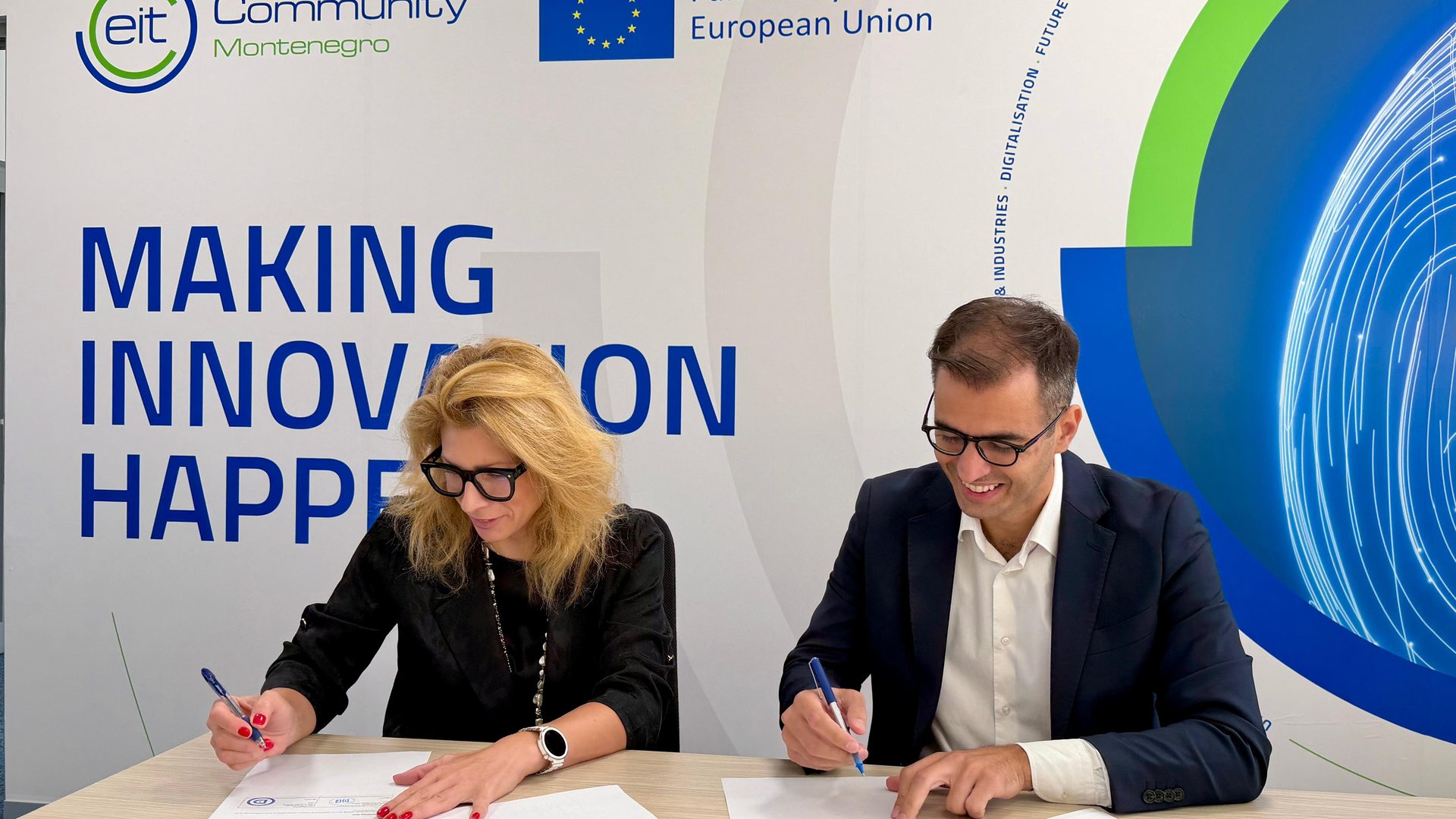
The relationship developed through joint ecosystem activities and continuous dialogue and was formally strengthened in 2026 through a Memorandum of Cooperation between Digital Den and the EIT Community Hub Montenegro. We have also worked on the development and submission of joint applications for EU-funded projects, in collaboration with the Center for Finance, translating institutional cooperation into concrete project development and international funding opportunities.
Looking ahead, we see considerable potential in connecting Digital Den’s startup pipeline and industry-focused activities with the specialised knowledge and networks available through the EIT Knowledge and Innovation Communities.
This is especially relevant as we strengthen our work in FinTech and InsurTech, HealthTech and MedTech, and TravelTech and HospitalityTech, with an increasing focus on industry pilots, technology validation and international market entry.
Our objective is not to duplicate existing support. It is to make the different parts of the innovation system easier for entrepreneurs to understand and access.
What value do European innovation initiatives such as EIT bring to startups in Montenegro that they might not otherwise be able to access?
One of the main limitations of a small ecosystem is not necessarily a lack of talent, but a lack of density. In a larger innovation ecosystem, an entrepreneur can often find a specialised mentor, research partner, corporate pilot, investor or experienced founder within the same city or professional network. In Montenegro, some of these resources do not yet exist locally at sufficient scale.
European initiatives such as EIT can therefore make an enormous difference. Through the EIT Community and its Knowledge and Innovation Communities, Montenegrin entrepreneurs can gain access to specialised sector knowledge, mentoring, business development support, finance, European markets, research organisations and international partners that would otherwise be difficult to reach. EIT Community Hubs can serve as local gateways to these wider European resources.
There is also another important dimension. Participation in European programmes exposes founders to higher levels of competition, standards and expectations. This process encourages teams to compare their products with solutions from larger markets, strengthen their business case and develop an international mindset much earlier.
For Montenegro, the opportunity is not limited to European funding. Access to knowledge, customers, networks, research capabilities and specialised infrastructure can be equally transformative.
The stronger the connection between Montenegro’s local support organisations and European networks such as EIT, the less isolated our founders will be from the wider European innovation market.
Many startups struggle with access to funding, mentors and international markets. In your experience, what are the biggest challenges for innovative companies in Montenegro today, and how can they overcome them?
Access to finance remains a challenge, but it is only one part of a broader issue.
A recurring problem is the gap between completing an educational or acceleration programme and applying a solution in the market. A team may have attended workshops, developed a pitch and even built an MVP, but still lack access to its first customer, pilot partner, specialised expert or appropriate regulatory guidance.
For some founders, the main challenge is product validation. For others, it may be corporate sales, intellectual property, data protection, certification, team organisation or investment readiness. Because the ecosystem is relatively small, a company may need several of these capabilities simultaneously but struggle to find them in one place.
Access to pilot environments is particularly important. A FinTech startup needs financial institutions willing to discuss integration and compliance. A MedTech company may require healthcare professionals, researchers and regulatory expertise. A HospitalityTech startup needs hotels or operators prepared to test a solution in real operations. Without these connections, even a technically strong product can remain stuck between prototype and commercialisation.
This is why Digital Den is moving towards a more integrated support model in which individual development plans, professional services, industry verticals, sandbox testing, investment preparation and international access are treated as connected parts of the same process.
Our advice to founders is not to treat every challenge as a funding problem. They should first identify the most important uncertainty standing between the company and its next stage of development and then find the right evidence, expertise or partner to resolve it.
Capital works best when it accelerates something that has already been validated.
Digital Den has built a diverse startup portfolio across different industries. Are there any emerging technologies or sectors that you believe will shape the next generation of innovation in Montenegro?
Digital Den remains open to promising innovations across sectors, while strategically concentrating its 2026–2027 activities on three verticals: FinTech and InsurTech, HealthTech and MedTech, and TravelTech and HospitalityTech.
The rationale is practical. Montenegro has an established financial sector that increasingly requires digitalisation, automation, cybersecurity, data-driven services and improved customer experience.
Healthcare presents significant opportunities for digital health, monitoring technologies, AI-supported solutions and more efficient organisation of services. However, products in this field require careful attention to evidence, data protection, safety and regulation.
TravelTech and HospitalityTech are particularly relevant because tourism is one of Montenegro’s most important industries. This provides something extremely valuable for innovation: a real-world environment in which technologies related to hotel operations, guest experience, revenue management, sustainability, mobility and automation can be tested with industry partners.
Across all three verticals, artificial intelligence, data, cybersecurity and automation will increasingly function as horizontal technologies rather than isolated sectors. Sustainability and resource efficiency will also become more important elements of product development.
Our ambition is not simply to declare these areas as priorities. We want to create the conditions around them by bringing startups and established companies to the same table, identifying real industry challenges and translating those challenges into pilots, sandbox tests and commercial partnerships.
That is when a vertical becomes an ecosystem rather than simply a label.
Looking ahead, what are Digital Den’s priorities for the next few years, and how do you envision contributing to the growth of the regional startup ecosystem?
Our next phase is focused on moving from a collection of successful programmes and partnerships towards a more integrated and repeatable innovation support infrastructure.
The first priority is to strengthen the development pathway available to founders. Our 2026–2027 programme connects Startup Readiness, individual portfolio support, Startup as a Service, specialised business training, sandbox testing, investment preparation and internationalisation within a single system. The aim is to ensure that a company does not lose continuity each time it moves from one type of support to another.
The second priority is the development of our FinTech and InsurTech, HealthTech and MedTech, and TravelTech and HospitalityTech verticals. Through industry roundtables, targeted expert engagement and pilot preparation, we want to build more direct relationships between startups and the companies or institutions that could become their first customers and testing partners.
The third priority is our sandbox model. We see controlled testing as one of the most important missing links between product development and commercial adoption. Startups need an environment in which they can test a clearly defined assumption, generate credible evidence and decide whether to improve, scale or change direction.
We will also continue strengthening access to capital, intellectual property support, research-to-market activities, collaboration with universities and our Startup as a Service model.
Internationalisation will remain an important pillar through both our European and U.S. networks, but the focus will increasingly be on targeted market entry rather than international exposure for its own sake.
Finally, we want Digital Den to become an even stronger connector between startups, corporations, investors, academia, public institutions and international networks such as EIT.
Our long-term objective is not for every successful startup to remain dependent on Digital Den. It is to help build an environment in which more companies can succeed because the necessary knowledge, infrastructure, capital and connections already exist around them.
If you could give one piece of advice to aspiring entrepreneurs who are just beginning their innovation journey, what would it be?
Validate before you scale—and fall in love with the problem before you fall in love with your solution.
One of the most common mistakes founders make is spending months building a product before gathering sufficient evidence that the problem is important and frequent enough for someone to change their behaviour or pay for a solution.
Talking to potential customers early does not weaken an idea. Quite the opposite: every assumption proven wrong before significant time and capital have been invested provides valuable information.
We encourage founders to be disciplined in separating what they know from what they believe. Who exactly has the problem? How are they solving it today? Why is the existing solution insufficient? Who makes the purchasing decision? Is someone willing to test the product, dedicate time to a pilot or pay for it?
Entrepreneurship is often presented as having a strong vision and refusing to give up. Vision matters, but the ability to learn, adapt and change direction is equally important.
The strongest founders are not those who are always convinced that they are right. They are those who absorb new evidence quickly and use it to make better decisions.
Finally, what message would you like to share with startups considering joining the EIT ecosystem and engaging with the EIT Community Hub Montenegro?
Use the opportunity—but approach it strategically.
For a startup from a small market, one of the greatest risks is remaining within the boundaries of the ecosystem it already knows. The EIT Community Hub Montenegro exists precisely to make Europe’s wider innovation network more accessible to local entrepreneurs and innovators.
However, founders should not apply to a programme simply because another programme will look good on their company profile. They should first understand what they need next. Is it sector-specific expertise, a research partner, a new market, an investor, a pilot opportunity or a mentor who has solved the same problem?
The clearer the objective, the more value a startup can gain from a network as large as EIT.
This is also why cooperation between Digital Den and the EIT Community Hub Montenegro is important. We can help companies develop readiness locally and identify what they need, while the EIT ecosystem can connect them with specialised expertise and opportunities across Europe.
Our message to founders is therefore: do not wait until you feel “international enough” to enter these networks. Start engaging early, learn how they work, understand where your company fits and build relationships before you urgently need them.
Montenegro’s innovation ecosystem will grow faster when local founders connect their ambition and knowledge with European expertise, markets and capital. The EIT ecosystem offers one of the strongest platforms for building those connections.
Sandra Kordic, PhD
CEO, Digital Den